
PRADET (Psychosocial Recovery And Development in East Timor) was established as a non-governmental organization (NGO) in 2002 after Timor-Leste gained its independence. The goal was to address the very high demand for psychosocial services for people who are experiencing trauma, mental health conditions and other psychosocial problems.
The service is delivered by local counselors who have solid experience in psychosocial health, with a strong focus on responding to stress, trauma, grief, sexual assault, domestic violence, human trafficking and mental health. In addition to practical assistance, PRADET places a strong focus on advocacy to make changes at the government level, including children's rights and protection, women's rights and protection, mental health care services as well as the improvement of rights of people with mental health conditions including homeless people living on the street. drugs, especially for young people.
PRADET's goals are achieved through the development and provision of culturally-sensitive counseling and non-formal education programs and through participation in policy development at both national and local levels. The specialized clinical and community services are coordinated in partnership with the government, NGOs, the church, other institutions and the community.
Community-based Programs
PRADET started the Programa Asistensia Moras Mental (Mental Health Assistance Program) or PAMM/MHAP in 2002. PAMM/MHAP provides psychosocial support and counseling, rehabilitation, referral of mental illness clients to access medical treatment at the Acute-Care Center and other health facilities. It supports the reintegration of clients to the family and community and holds awareness-raising activities to spread information about mental health conditions, treatment and support strategies and to reduce stigma and discrimination in society and increase the support for people with mental health conditions.
PAMM/MHAP has the following activities:
To implement PAMM/MHAP, PRADET works closely with the Ministry of Health (Mental Health Section) specifically mental health nurses, to provide home-based medical treatment, counseling and basic needs support to mental illness clients in eight districts: Dili, Ermera, Liquica, Bobonaro, Ainaro, Aileu, Baucau and Oecusse.
Systemic limitations continue to impact service quality: shortages of psychotropic medications, inadequate infrastructure, and the lack of standardized tools for case-management and referrals. While trained mental health officers are available in certain areas, many health facilities face financial constraints, and transportation barriers especially in remote municipalities that hinder timely follow-up and supervision.
On a positive note, there has been growing engagement by health authorities, in particular in Dili, Ermera, and Oecusse, in addressing mental health issues. Enhanced involvement of families and community leaders has strengthened grassroots mental health support systems. Also, partnerships with civil society organizations and faith-based institutions have expanded the program's reach, though long-term sustainability will require continued collaboration.
According to the six-month report from the Ministry of Health (July-December 2025) covering all thirteen parishes, a total of 1,996 individuals (nine hundred ninety-seven men and nine hundred ninety-nine women) actively sought mental health services, and seventy-seven new cases (thirty-seven men, forty women) were identified during this period.
Family Link Meeting on Mental Health
On 8 August and 10 October 2025, PRADET conducted a Family Link session in Dili and Ermera Municipality bringing together thirty-eight family members (twelve males, twenty-six females) of clients from Dalan Ninin , the Psychosocial Rehabilitation Centre, and the community. Participants included parents and siblings of clients. The session aimed to enhance knowledge, skills and awareness among families on how to support their relatives with mental health conditions during the recovery process.
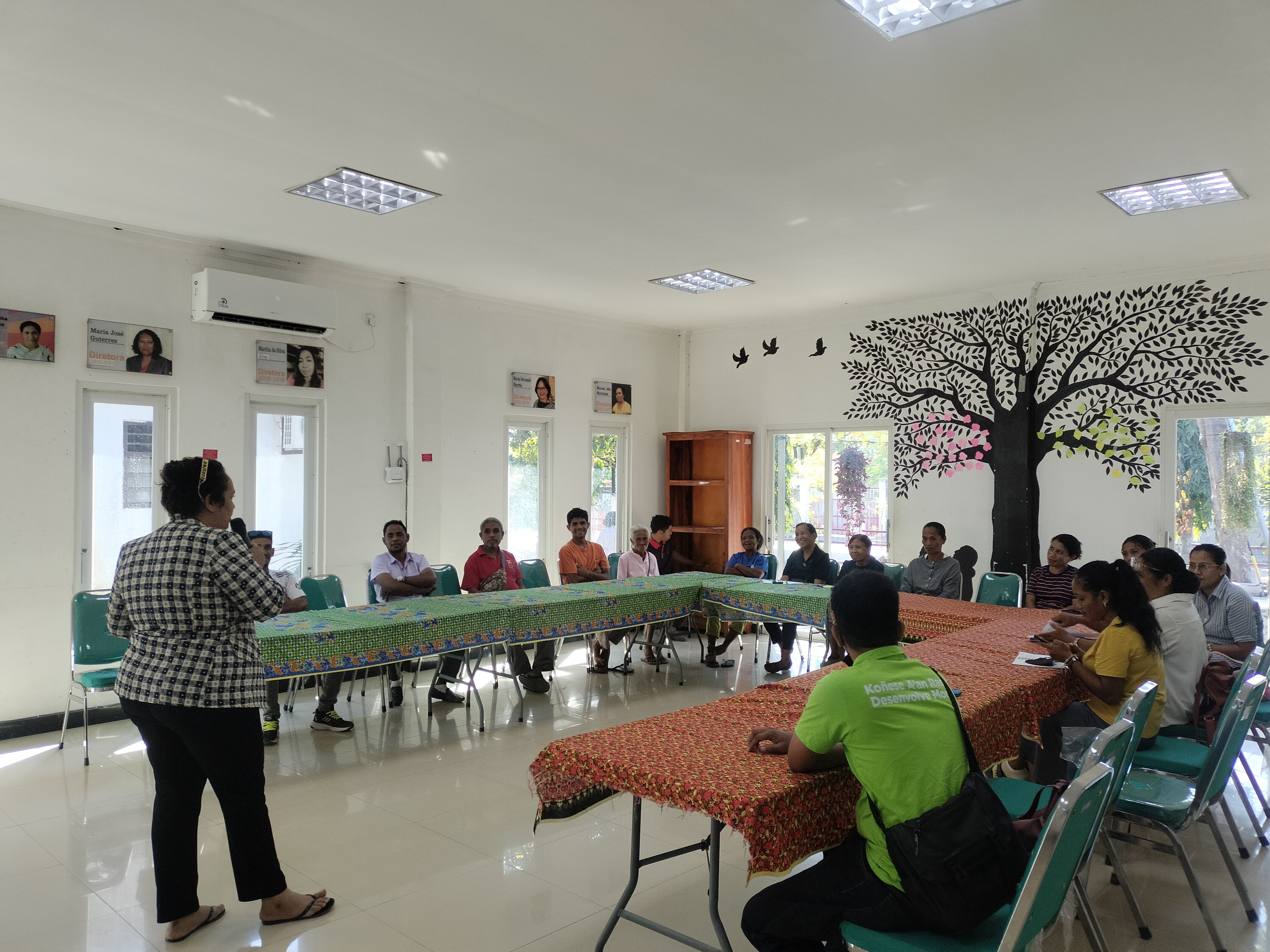
Family Link session in Dili, 8 August 2025.
Referral System and Psychosocial Support in the Community
PRADET collaborated with the Ministry of Health (Mental Health section) and the Ministry of Social Solidarity and Inclusion (National Directorate for the Promotion of the Rights of People with Disabilities) in developing the standard operating procedure on integrated referral of cases and psychosocial support in the community. Local authority officials and relevant stakeholders attended dissemination of information activities on this issue in Bazartete-Liquica on 17 July 2025 and Balibo-Bobonaro on 29 July 2025. A total of one hundred thirty-one participants (forty-three of whom were women) attended the two activities consisting of village and sub-village chiefs, case manager, community police officer, religious leaders, family members of clients and other relevant stakeholders.
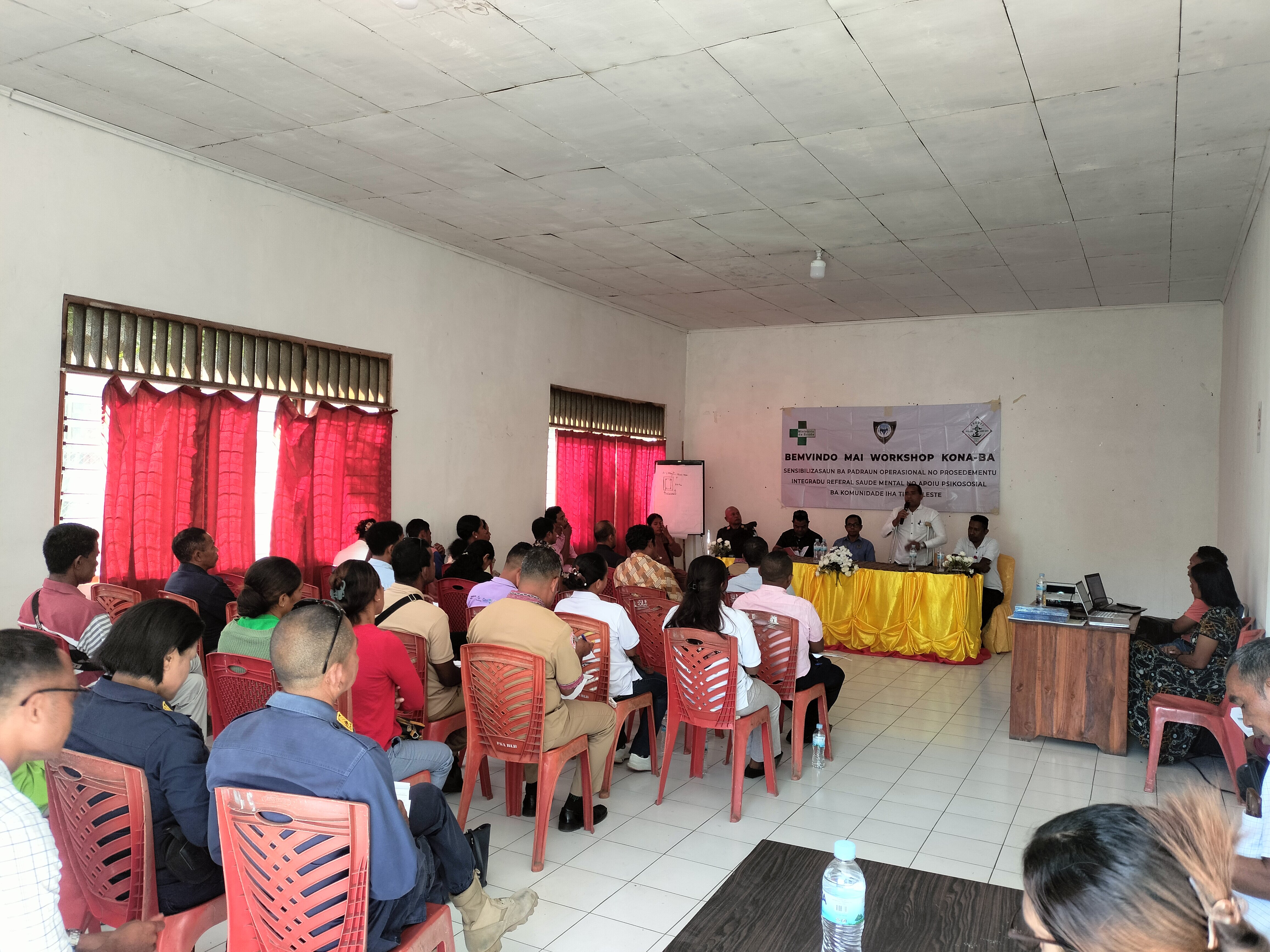
Information dissemination activity in Liquica and Balibo, 29 July 2025.
Prevention of Stigma and Discrimination
PRADET team conducts monitoring surveys to understand how communities perceive individuals with mental health issues, what actions are being taken to prevent stigma and discrimination, and what recommendations local authorities and families can offer to strengthen protection and inclusion. In September 2025, a PRADET team conducted a monitoring survey in the Post Administrative areas of Dom Aleixo and Cristo Rei. This initiative a growing recognition that mental health is not only a medical issue but also a matter of rights, dignity, and community solidarity.
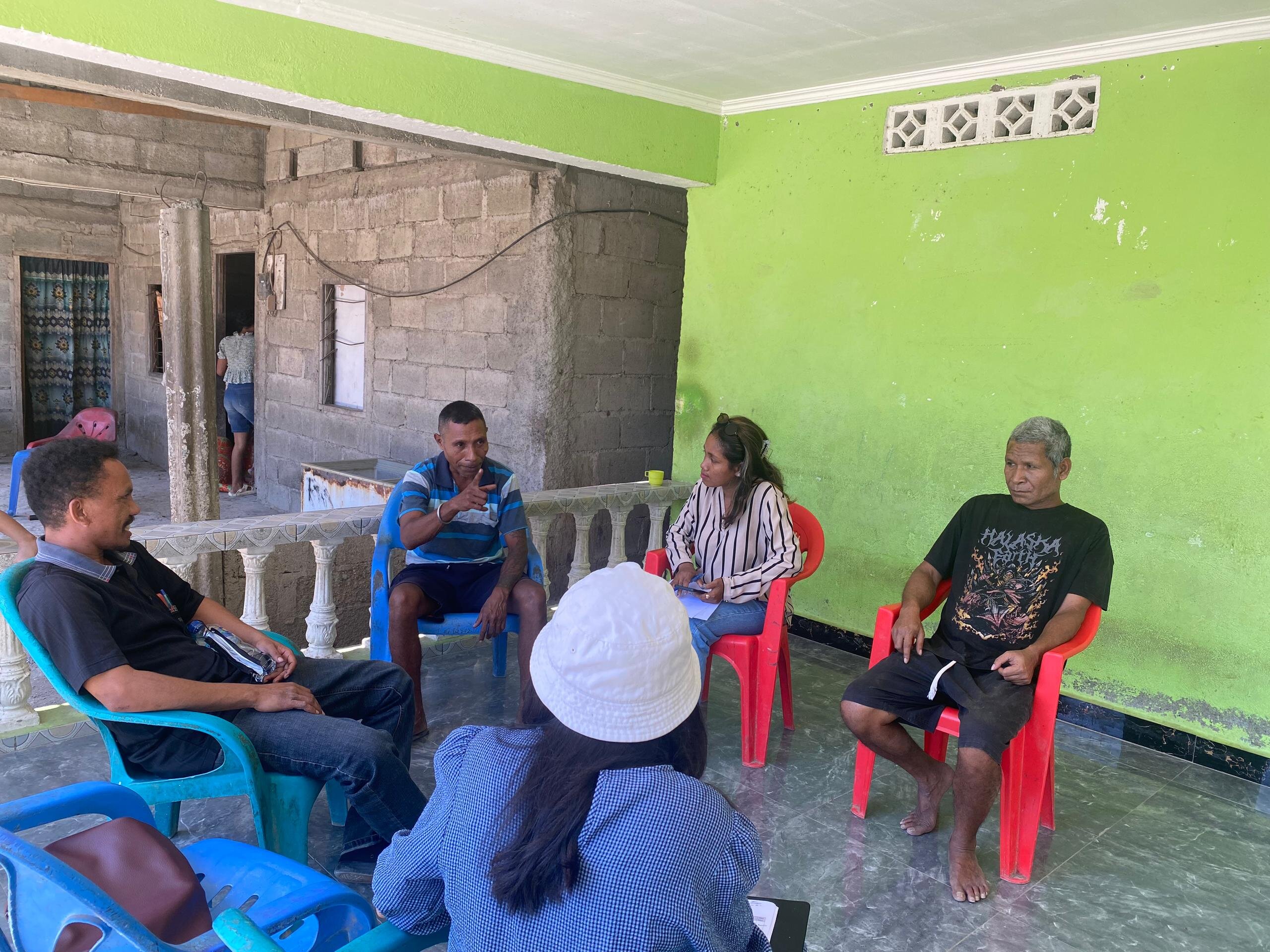
Survey for prevention of stigma and discrimination against people with mental conditions in the community, 24 September 2025.
Mental Health Dissemination to Community Leaders in Haupu Village
In December 2025, a two‑day mental health dissemination activity was carried out in Haupu village, post‑administrative Letefoho, Ermera municipality. The aim was to increase mental health awareness among community leaders and to strengthen community-level coordination for identification, referral, support, reintegration and stigma prevention individuals for with mental health conditions. A total of thirty community representatives participated (with fourteen women participating), including village and sub‑village chiefs, delegates, teachers, and family members of clients.
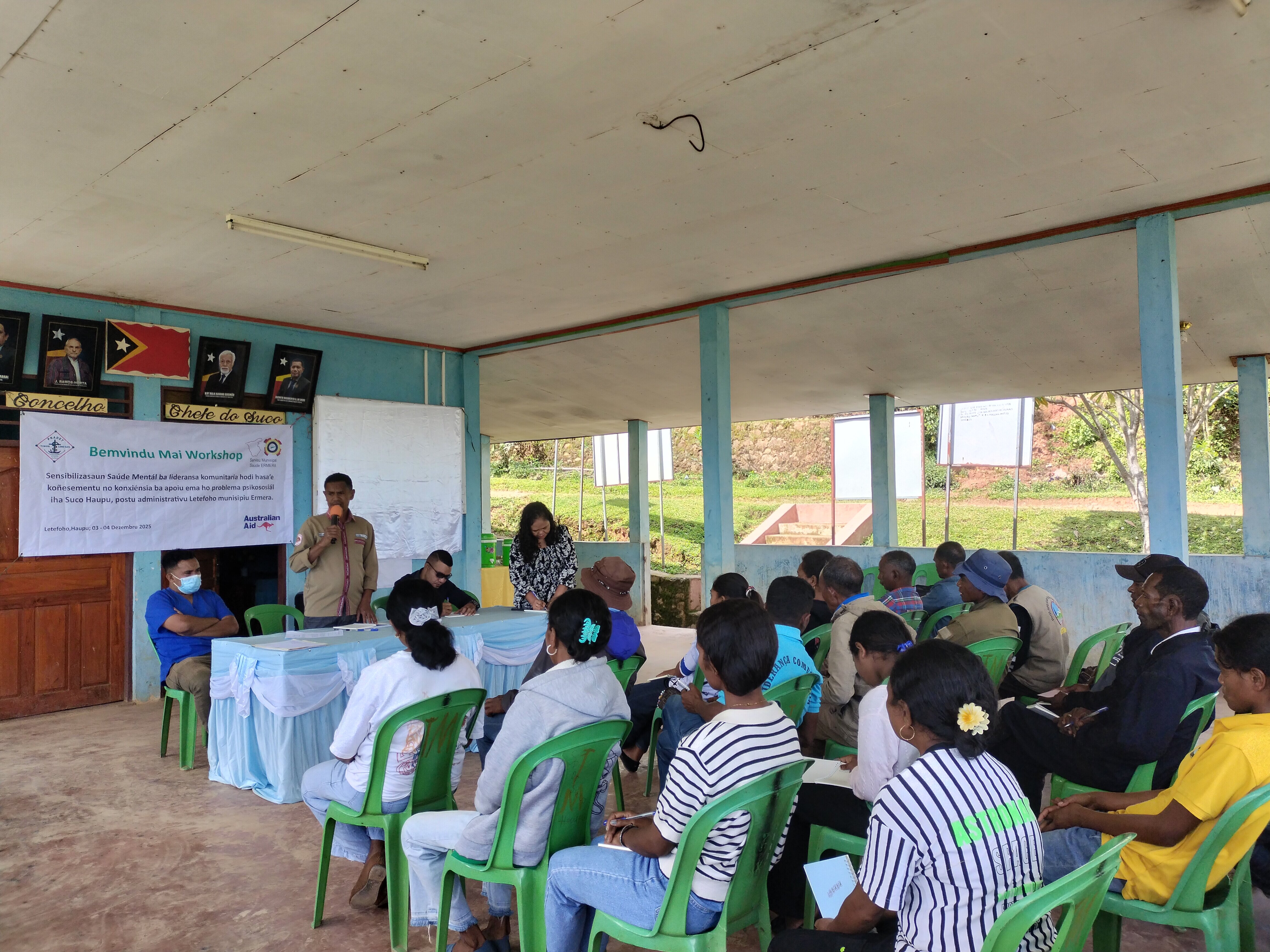 Mental Health Education for Community Leaders in Haupo Ermera,
3 December 2025.
Concluding Statement
PRADET's community-based mental health care program operates within a dynamic context characterized by notable progress as well as enduring challenges. Though mental health is increasingly recognized as a national priority in Timor-Leste, significant gaps remain in service delivery, policy implementation, and public awareness. Persistent stigma particularly in rural communities continues to constrain help-seeking behavior, underscoring the need for sustained community-level outreach and education.
For further information, please contact: PRADET, DIT, Efacas Manleuana, Dili, Timor Leste; e-mail: pradet_timorlorosae@yahoo.com ; info@pradet.org ; www.pradet.org .