
What began in 2016 as a social media campaign sharing stories of struggle and hope has grown into one of the Philippines' most visible mental health movements. MentalHealthPH started with a simple but powerful premise: mental health experiences of Filipinos are real, significant, and deserving of safe and public conversation. From that thesis emerged a strong community that now connects more than 43,000 members across the country.
At its core, MentalHealthPH envisions a Philippines where mental health does not limit individuals from thriving in their own spaces and communities. It affirms that "health without mental health" concept is missing, mental health is not a private burden to be carried alone, and most importantly, it is a fundamental human right.
The Urgency of Youth Mental Health in the Philippines
The emergence of MentalHealthPH did not happen in a vacuum. It rose at a time when mental health concerns among Filipino youth were becoming impossible to ignore.
Globally, the World Health Organization reports that more than 720,000 people die by suicide each year, and suicide remains one of the leading causes of death among young people aged 15 to 29.[1] For adolescents navigating identity formation, academic pressure, economic uncertainty, and digital hyperconnectivity, the weight of distress is increasingly visible.
in the Philippines, the numbers and lived realities mirror this global concern. In recent years, official statistics have shown an upward trend in suicide mortality, with a significant proportion of cases involving young people. Beyond mortality data, distress is reflected in the rising demand for crisis intervention services. The Department of Health reported that during the 2025 holiday period alone, hundreds of calls were received by the DOH-National Center for Mental Health (NCMH) crisis hotline within just a week. Follow-up reports in early 2026 indicated even higher call volumes spanning late December to early January, with anxiety and depressive symptoms frequently cited and young adults prominently represented among callers.[2]
This context makes the intent of the Philippine Mental Health Act (RA 11036) more urgent than ever. While the law established a national framework to integrate mental health into the health system and promote mental health in schools and workplaces, implementation gaps persist due to limited capacity, uneven service availability, and continuing stigma.[3]
For many young Filipinos, especially those outside major urban centers or those hesitant to seek in-person help, digital spaces have become the most immediate entry points to information, peer connection, and crisis resources. It is precisely in this gap, where the need is rising, and formal systems remain stretched, that MentalHealthPH's digital-first, community-centered model becomes especially consequential.
From Awareness to Systems Change: #MentalHealthPH
This community/group was named #MentalHealthPH to help build a future where mental health does not get in the way of people achieving their dreams and thriving within their own communities.
MentalHealthPH's advocacy is guided by its Three S and Three O Framework: Self, Society, and System. This framework recognizes that meaningful engagement in mental health requires transformation at multiple levels.
At the level of Self, the organization promotes mental health literacy, self-awareness, and self-care. At the level of Society, it challenges stigma by amplifying lived experiences and fostering open dialogue. At the level of System, it engages in partnerships and policy conversations to strengthen institutional responses and promote mental health at all possible policy entry points. This is mainly done by maximizing social media and Online digital technology, On-ground activities, and Onward collaborations.
This layered approach distinguishes MentalHealthPH from awareness-only campaigns. It recognizes that inspirational messaging must be coupled with structural advocacy and that community conversations must connect to policy development.
Digital Advocacy as Access
#MentalHealthPH has been working since 2016 on increasing awareness about people's struggles with mental health illness and ending the stigma about it, empowering members to support themselves and others, and collaborating with various sectors towards sustainable solutions. The organization's core strength lies in its strategic use of digital platforms to expand access to mental health support. In a country marked by geographic fragmentation and service disparities, online spaces have become vital conduits for information, community and intervention.
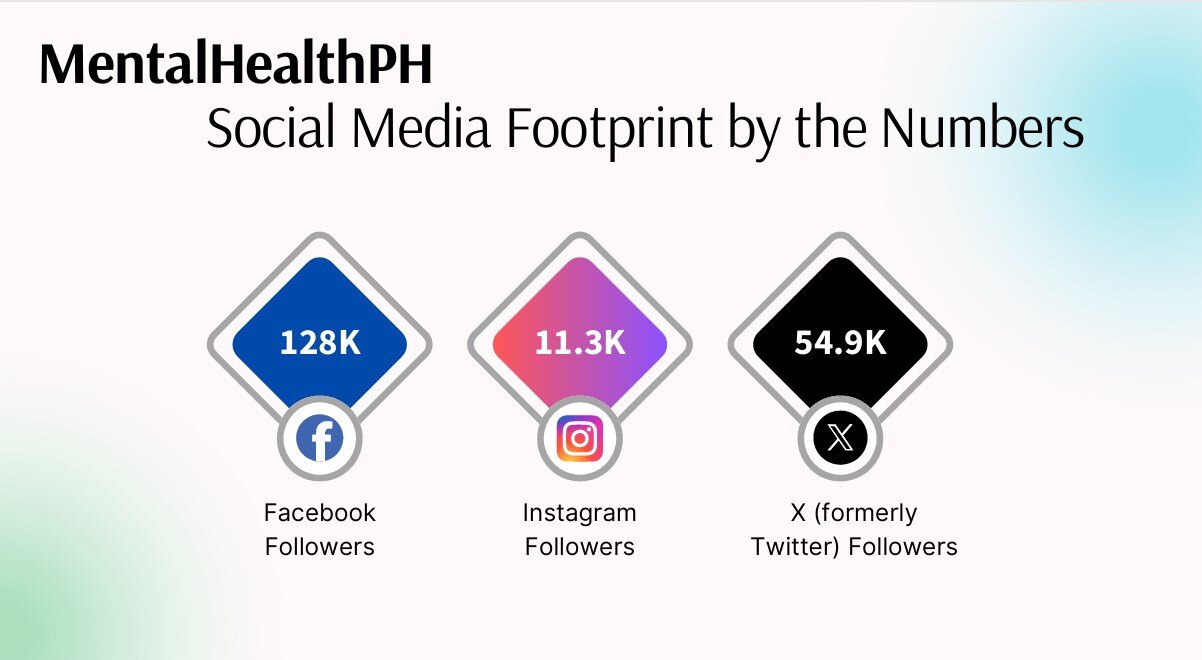
The core work of #MentalHealthPH is in giving faces and voices to those experiencing mental health concerns--from struggling with the reality of mental health illness, the stigma of needing and seeking help, as well as supporting the people they love.
#MentalHealthPH uses digital spaces for maximum impact, to reach as many Filipino communities as possible. It shares valuable resources using online tools like social media networks, livestreams, and a website. The internet's speed, accessibility, and self-paced nature allow #MentalHealthPH to reach Filipinos who would otherwise be excluded by the time-based, limited, and expensive nature of most offline events.
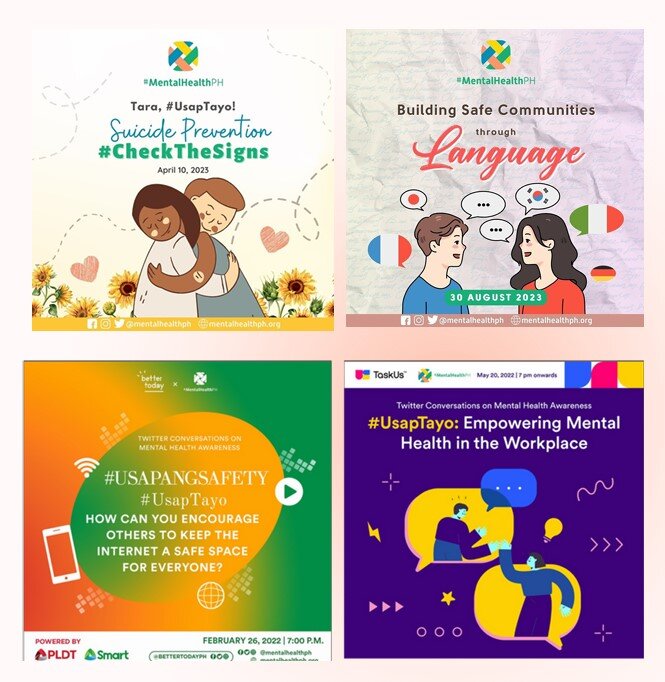
Campaigns such as #VoicesOfHope humanize mental health conditions by sharing authentic stories of people living with mental health concerns. By giving mental health a face, and a voice, the campaign directly confronts stigma and reframes vulnerability as courage.
#40SecondsOfHope, inspired by the global statistic that one life is lost to suicide every forty seconds, transforms data into collective responsibility. It invites individuals to pause, share messages of hope, and participate in suicide prevention awareness and discussions.
#MHTalks serves as a livestreamed educational platform where mental health professionals and advocates discuss misconceptions, cultural perspectives, and community-based responses to mental wellness challenges. It is an activity launched on a digital platform as a way of discussing topics like the different lenses for viewing mental health, and various misconceptions of mental health.
These initiatives, among others, demonstrate how digital spaces can move beyond passive consumption toward active engagement and education.
#UsapTayo: A Commitment for Safe Digital Spaces
Among its most impactful programs is #UsapTayo (Let's Talk), a moderated online discussion (in X Chat, formerly known as Twitter) held every 10th, 20th, and 30th of the month. Designed especially to engage youth and People With Lived Experiences (PWLE), #UsapTayo creates structured, psychologically safe conversations within social media environments that are often fragmented or hostile.
Each session is anchored on reflective prompts addressing themes such as forgiveness, identity, growth, societal pressure and collective healing. These discussions are not incidental. They are intentionally moderated to ensure respect, empathy and constructive engagement.
The program's reach has been substantial. In May 2021, a collaboration to discuss mental health in digital spaces generated approximately 55 million impressions, thousands of tweets, and participation from across the country. Mental health conversations trended nationally, signaling a shift in public discourse.
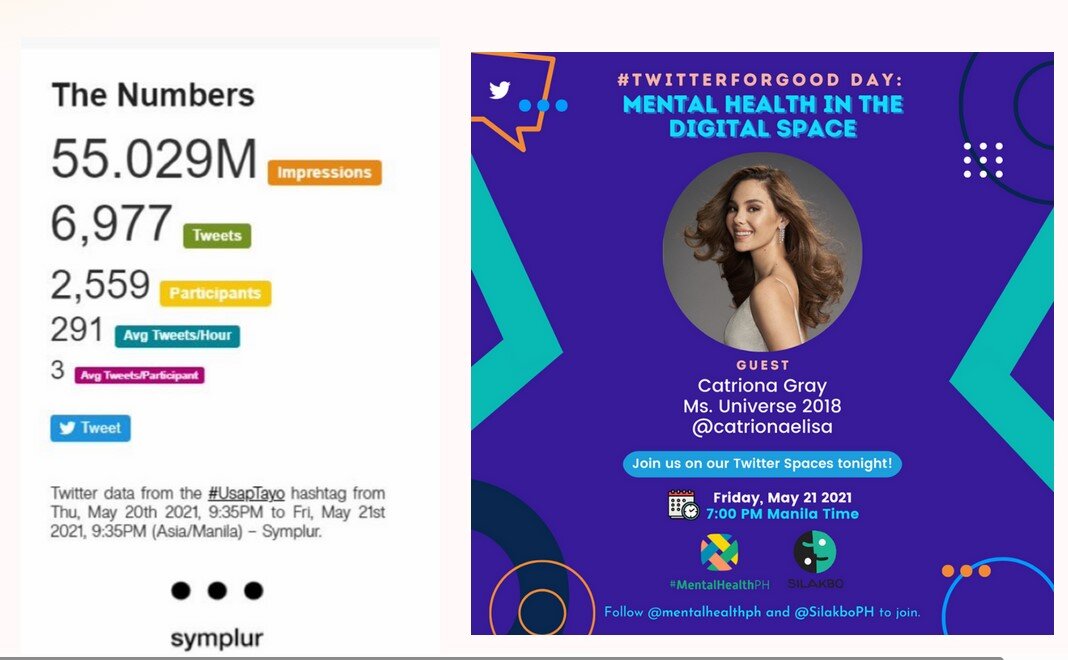
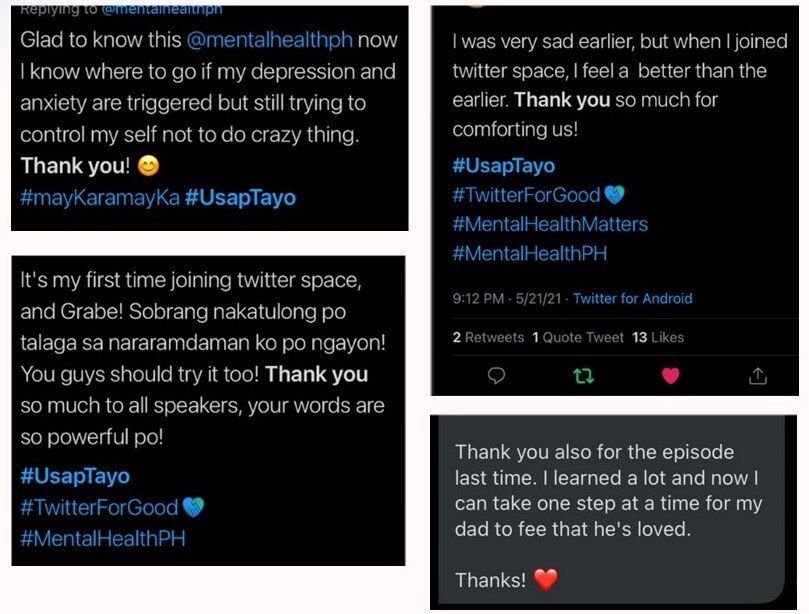
Yet the significance of #UsapTayo cannot be measured solely in digital metrics. Participants consistently expressed feeling heard, validated and less alone. In a context where formal services remain limited, such structured digital conversations serve as crucial psychosocial entry points.
Innovation Rooted in Filipino Values
MentalHealthPH has also expanded its digital ecosystem through Kapwa, a structured chatbot designed to provide accessible mental health resources online. The choice of the word "Kapwa" reflects a core Filipino value of shared identity and interconnectedness. It reinforces the idea that mental health is not an individual struggle detached from community, but a shared concern requiring collective care.
Beyond digital interventions, MentalHealthPH conducts workshops and on-ground engagements in schools and workplaces to ensure inclusivity for individuals with limited internet access. It has partnered with national and international institutions (including the Department of Health, the World Health Organization Philippine Office, United for Global Mental Health), contributed to consultations for the Strategic Plan of the Philippine Council for Mental Health, among others.
Its self-care kits, co-developed with youth and people with lived experiences, have been co-branded by the Department of Health as part of official health promotion materials. This institutional recognition underscores the value of participatory, community-informed design.
Youth as Co-Creators, Not Beneficiaries
A defining feature of MentalHealthPH is its commitment to centering youth and lived experience in all campaigns and interventions. Young people are not treated merely as recipients of mental health interventions. They are collaborators, moderators, designers and advocates.
By positioning lived experience as experts, which they truly are, MentalHealthPH disrupts traditional hierarchies in health advocacy. It affirms that those who have navigated mental health challenges bring indispensable insight to solution-building.
This approach fosters not only empowerment but sustainability. When youth shape the interventions meant to support them, those interventions become more responsive, relevant and resilient.
Toward a Mentally Healthier Philippines (and beyond!)
MentalHealthPH represents a critical evolution in Philippine mental health advocacy. It demonstrates how digital technology, community storytelling, participatory design, and institutional collaboration can intersect to expand access and reshape public narratives.
As mental health challenges among Filipino youth continue to intensify amid academic pressures, economic uncertainty, and social change, the need for integrated responses grows more urgent. MentalHealthPH's work underscores a fundamental truth: stigma must be dismantled, services must be expanded, and youth voices must be centered.
The movement that began with a hashtag has matured into a platform. It continues to advocate for a Philippines where conversations about mental health are normalized, services are accessible, and every young person can seek support without fear.
Mental health must no longer be a barrier to opportunity. Through sustained advocacy, digital innovation, and leadership, MentalHealthPH is helping ensure that it will not be.
Michael Angelo Pereira is the Secretary General of #MentalHealthPH.
For further information, please contact: Michael Angelo Pereira, #MentalHealthPH, e-mail: mpereira@mentalhealthph.org; https://mentalhealthph.org/.
[1] World Health Organization, Suicide (Fact sheet), 25 March 2025. Retrieved from www.who.int/news-room/fact-sheets/detail/suicide?utm_source.
[2] Philippine News Agency, DOH logs 127 holiday NCD cases, 451 mental health hotline calls, 26 December 2025. Retrieved from www.pna.gov.ph/articles/1265861?utm_source.
[3] Analyze this: Less than 1 mental health worker per 100,000 Filipinos, Philippine Daily Inquirer, 5 September 2024. Retrieved from https://newsinfo.inquirer.net/1980107/analyze-this-less-than-1-mental-health-worker-per-100000-filipinos?utm_source.