
The ongoing conflict in Gaza has severely impacted the mental health of its population, leading to various psychological disorders across demographic groups. Studies in Gaza and similar conflict zones report high rates of post-traumatic stress disorder (PTSD), depression, anxiety, and acute stress disorders among children, adults and the elderly. The severity of these issues often correlates with exposure to violence, loss and displacement. Thabet and Vostanis reported that 54 percent of children in Gaza had PTSD, with comorbid depression (41 percent) and anxiety (34 percent), due to traumatic events like bombings and loss of loved ones. Al-Krenawi et al found that 40 percent of adults reported PTSD, with high anxiety (37 percent) and depression (45 percent). Elderly individuals exposed to repeated trauma showed high rates of chronic stress and depression, worsening their physical health.
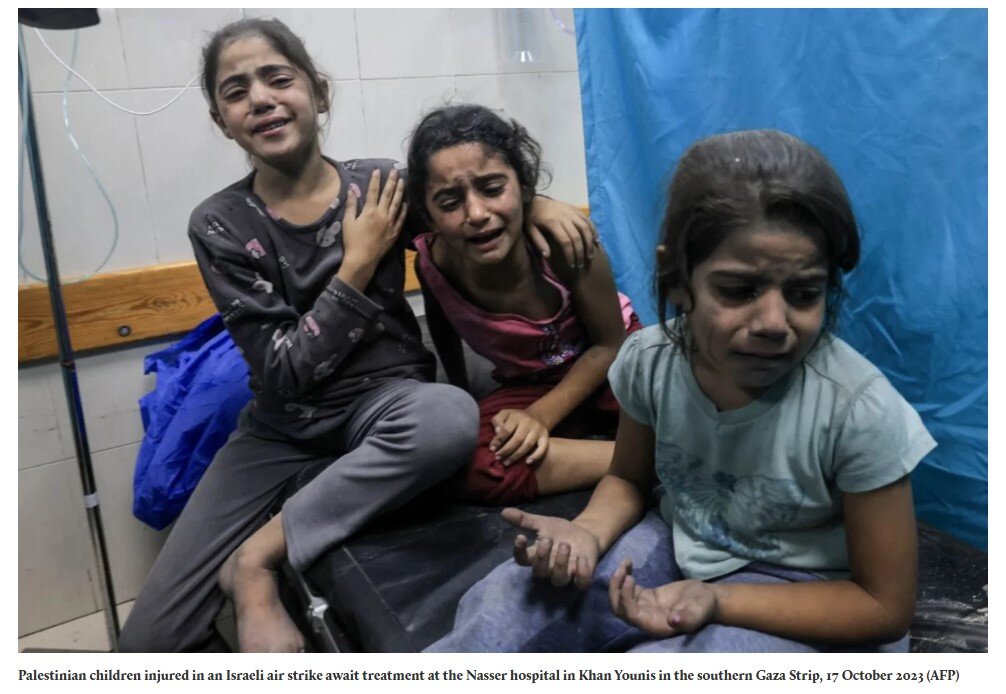
Injured Palestinian children, 2023, AFP [1]
Specific groups faced unique challenges: children exposed to prolonged conflict experienced disrupted development, emotional dysregulation and maladaptive coping mechanisms. Women are often victims of domestic and sexual violence, exacerbated by conflict and leading to complex anxiety trauma. They also bear caregiving burdens, which heighten and depression. Healthcare workers in Gaza are frequently exposed to trauma, face burnout, PTSD, and depression, which impact their wellbeing and the quality of care they provide.
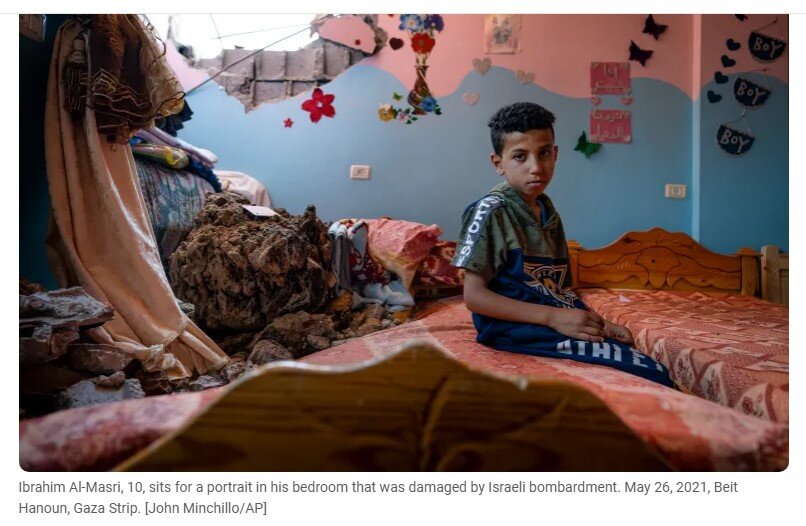
A Palestinian boy inside his bombed room, 2021, AFP [2]
The long-term mental health risks in Gaza include complex PTSD and intergenerational trauma, as repeated trauma causes persistent symptoms during adulthood. Intergenerational trauma further burdens communities, as trauma effects transcend behavioral and biological channels to affect future generations. This profound and layered impact highlights the urgent need for comprehensive, culturally-sensitive mental health interventions in Gaza.
Support
Addressing Gaza's mental health needs amid conflict formal and informal interventions. International organizations are leading efforts to provide Mental Health and Psychosocial Support (MHPSS). Alongside these, community-based approaches, including peer support groups and local initiatives, play a crucial role. Despite these efforts, challenges persist, necessitating more innovative and culturally-adapted strategies involving effective mental health care.
Formal interventions include emergency mental health services by World Health Organization (WHO) and United Nations Relief and Works Agency for Palestine Refugees in the Near East (UNRWA), such as training local health workers in psychological first aid and establishing mental health units in healthcare facilities. psychosocial support through mobile clinics and outreach teams, reaching displaced populations and those with limited access to facilities.
Community-based support systems are equally vital. Local initiatives, including peer support groups, youth clubs and women centers help individuals cope with trauma and stress. Community centers offer safe spaces for mutual support, informal counseling and education, particularly benefiting women and children through peer support groups that enhance social cohesion. These grassroots efforts offer culturally relevant support, safe spaces for sharing experiences and help reduce stigma. Although less structured, community-driven approaches effectively address specific psychosocial needs.
Innovative approaches such as telemedicine and digital health platforms help overcome access barriers. The telepsychology services of the UNRWA provide remote counseling via phone and video, ensuring care continuity despite mobility issues. Mobile clinics by MSF and PRCS deliver mental health services directly to remote or highly affected areas, including activities like art therapy and group counseling.
Resilience-building is a key strategy, focusing on enhancing the ability of individuals and communities to recover from trauma. Trauma-informed care models are promoted by WHO and UNICEF to integrate an understanding of trauma into practices and avoid re-traumatization. Culturally-adapted interventions such as group therapy that incorporate traditional practices are emphasized for fostering community cohesion and psychological healing.
Combining formal and informal interventions, innovative delivery methods and culturally-sensitive approaches can help address Gaza's mental health crisis. However, continuous conflict, restricted access and resource limitations hindering their effectiveness, highlighting the need for sustained investment and adaptable trauma-informed strategies.
Discussion
The current war in Gaza has caused significant barriers mental health and psychosocial challenges, including emotional instability, stress, anxiety, trauma, and other psychological disorders. The prevalence of PTSD, depression and anxiety is high due to continuous exposure to violence, displacement, loss of loved ones, and community destruction. Vulnerable groups such as children, women and the elderly face unique challenges, including developmental disruptions and increased domestic violence. The limited MHPSS services, compounded by damaged infrastructure, shortage of trained professionals and cultural stigma create substantial to care. Healthcare workers also suffer from burnout and secondary trauma, straining the already overwhelmed health system.
Studies have highlighted the importance of disaster management preparedness among healthcare professionals to mitigate these challenges. For example, Aqtam et al evaluated preparedness in the Palestinian context, highlighting strategies that could improve response capacity during crises. but also their descendants, perpetuating psychological distress and social disruption.
Community-based approaches such as peer support and culturally-adapted interventions have shown promise in fostering resilience and collective healing. However, there is a need for scalable MHPSS interventions to address the immediate and long-term needs. Innovations such as telemedicine and digital health can offer remote support, helping to overcome barriers created by continuous conflict.
Comprehensive, context-sensitive interventions are essential, including psychological first aid, trauma-informed care and community-based support systems. Integrating mental health into primary health services, training local professionals and ensuring resource availability are vital. Policies that prioritize mental health in emergency response with adequate funding and support are critical to building a resilient healthcare system capable of addressing Gaza's complex mental health needs.
Conclusion
The war in Gaza has created a significant burden of mental health conditions, disrupting the quality of life and social structures of the affected population. Effective interventions must be tailored to the unique sociocultural context of Gaza and should be implemented across different phases of the conflict--pre-, peri- and post-conflict periods--to address the adverse mental health effects comprehensively. Psychosocial education, clinical interventions and community-based approaches are essential for fostering resilience, empowering the community and building sustainable mental health systems. By integrating these measures, it is possible to improve the psychological outcomes for those affected by the conflict and prepare the community to better cope with future adversities.
Recommendations
To address the extensive mental health impact of the current conflict in Gaza, several strategies should be considered. Integrating mental health into emergency plans is critical, ensuring that MHPSS services are accessible from the onset of crisis and sustained throughout the recovery phase. Rapid mental health assessments and the inclusion of these services within primary health care are essential to mitigating the progression of chronic mental health issues. Policymakers must develop evidence-based national mental health policies tailored to the needs of conflict-affected populations. Such policies should emphasize and culturally-appropriate care, decentralizing services through mobile clinics, telemedicine and community-based programs.
Strengthening coordination among such as WHO, UNRWA and NGOs can help efforts streamline and maximize the use of resources. Community resilience can be enhanced by encouraging peer support and psychosocial education, empowering communities to take active role in their mental health care. Investments in training and capacity-building are vital. For example, there is a need to train local healthcare workers in trauma-informed care, self-care and burnout management. Partnering with academic institutions could help develop local mental health expertise through specialized training and fellowships. Maintaining a steady supply of essential psychotropic medications and assessment tools is imperative to address severe mental health conditions effectively in these challenging contexts.
References
Thabet AA, Vostanis P. "Post-traumatic stress disorder and depression in children and adolescents following the Gaza conflict," Child Psychiatry Hum Dev. 2017;48(3):469-475. doi: 10.1007/s10578-016-0684-5.
Al-Krenawi A, Graham J, Khamis V, et al. "PTSD, anxiety, and depression among Palestinians in Gaza." Soc Psychiatry Psychiatr Epidemiol, 2017; 52(2):143-50. doi: 10.1007/s00127-017-1368-6.
This is an edited excerpt of Ibrahim Aqtam, A narrative review of mental health and psychosocial impact of the war in Gaza, WHO Eastern Mediterranean Region, East Mediterr Health J. 2025;31(2):89-96, https://doi.org/10.26719/2025.31.2.89 . www.emro.who.int/afg/a-narrative-review-of-mental-health-and-psychosocial-impact-of-the-war-in-gaza.html . References have been omitted.
Dr Ibrahim Aqtam is the Quality Management Director in Nablus University for Vocational and Technical Education.
For further information, please contact: Dr Ibrahim Aqtam, Nablus University for Vocational and Technical Education, Nablus, West Bank, Palestine, ph 02-2921858; fax: 02-2921859; e-mail: ibrahim.aqtam@nu-vte.edu.ps; www.nu-vte.edu.ps.
[1] How Israel-Hamas war in Gaza is impacting the mental health of Palestinian children, Arab News, www.arabnews.jp/en/middle-east/article_106937/ .
[2] Photo from Kamran Ahmed, Trauma and mental health in Gaza, Al Jazeera, www.aljazeera.com/opinions/2021/6/14/trauma-and-mental-health-in-gaza .