
On 7 August 2025, the Act on the Protection and Promotion of the Way of Life of Ethnic Groups was passed in the House of Representatives. This is the first law in Thailand that guarantees the ethnic way of life. It is about healing the past violations that might have impacted the ethnic minority in Thailand since the establishment of the Thai nation-state.[1]
A report of the Sirindhorn Anthropology Centre states that Thailand has over sixty ethnic groups with about six million people, or about 10 percent of the total population. And among these ethnic groups, the Karen, the Mani, the Mlabri and the Moken have suffered from racial discrimination, subjected to forced evictions and deprived of basic rights despite being Thai citizens.[2]
Past Violations: From Forced Eviction to Enforced Disappearance
The Karen-Bangkoi-Jai Paen Din have lived in the highlands and deep in the forest close to the Thai-Myanmar border for decades. This area includes the Kaengkachan National Park. The most senior community member, Ko-I Meemi, aka Grandpa Ko-I, was born in this area in 1911 according to his Thai national identification card. He died in 2018 at the age of 107. The area was declared a forest reserve in 1965, and was incorporated into Kaeng Krachan National Park in 1981. In 1996, the government systematically forced them to resettle in the lowlands claiming that their sustainable cultivation of the forest was an encroachment on forest area.
During the 2000 to 2011 period, three helicopter crashes occurred on military transport and recovery missions, resulting in more than twenty fatalities. The news about these consecutive tragedies marked one of the most significant military losses in Thailand and deeply affected the public. And because of these accidents, the public learned to know of the existence of Karen-Bangkoi-Jai Paen Din community of Bangkoi.
Thailand proposed in 2015 the listing of the Kaeng Krachan Forest Complex (KKFC) as a UNESCO Natural World Heritage Site. The UNESCO decision on the proposal was postponed four times due to the poor participation of the local community in the process. However, the World Heritage Committee of UNESCO during its 44th session in 2021 declared KKFC as a natural world heritage site. Both the Thai authorities and UNESCO failed to organize any meaningful consultation with the Karen community on the matter. Consequently, the rights of the Karen community to land and livelihood, and culture and tradition were not recognized.
This is borne by the continuing denial of the existence of indigenous peoples despite Thailand being signatory to the United Nations Declaration on the Rights of Indigenous Peoples (UNDRIP) and having acceded to the International Convention on the Elimination of All Forms of Racial Discrimination in 2003.[3]
Thailand's stance is shaped by its history of avoiding formal western colonization. Issues arise from internal colonialism, where the state and ethnic Thai elite construct a socio-political order that marginalizes and delegitimizes indigenous identities, treating them as "alien" or "uncivilized."
The denial and marginalization are reinforced through powerful stereotypes portraying indigenous groups as insurgents, drug traffickers, or forest destroyers. These labels are more than insults; they heighten state security concerns and rationalize repressive measures. Consequently, indigenous peoples in Thailand have faced systemic human rights violations, including forced evictions, extrajudicial killings, torture, and enforced disappearances, all justified under the guise of maintaining national security.
Despite the Cabinet Resolutions on June and August 2010 on reviving the way of life of two protected populations, the Karens and the local fisherfolk (Manis), the Karens have been losing their houses and land, some were arrested and convicted of crimes, and some others were declared forcibly disappeared persons, as was the case of Porlajee Rakjongcharoen or Billy.
The Case of Billy
On 17 April 2014, the well-known Karen community rights defender, Porlachee Rakjongcharoean alias Billy, was declared a victim of enforced disappearance. He was last seen when he was arrested by Chaiwat Limlikitaksorn, the Chief of Kaeng Krachan National Park (KKNP), for allegedly illegally possessing a wild bee honeycomb and six bottles of honey. In June 2018, the Department of Special Investigation (DSI) of the Ministry of Justice (MOJ) took up the case of the disappearance of Billy as a special case for investigation. On 3 September 2019, the DSI announced that human bone fragments were discovered in the Kaeng Krachan Dam reservoir. DNA tests of the fragments matched those conducted on Billy's mother, leading the DSI to conclude that the bones were Billy's and that he had been murdered.[4] The DSI also announced that the investigation team found an oil barrel, its lid, two steel rods, a burned wooden piece together with the two bones at the bottom of the reservoir. The Central Institute of Forensic Science subsequently confirmed the genetic trace of one of the bones found inside the barrel matched that of Billy's mother. The investigation team then concluded it was part of Billy's remains. The condition of this piece of human skull, which was burned, cracked, and shrunk due to exposure to heat of 200 to 300 degrees Celsius, suggests the killers burned his body to conceal the crime. Till today the enforced disappearance of Billy has not yet been verified. The Cross Cultural Foundation (CrCF) represented Billy's family in the cases in both criminal court and civil court related to the disappearance of Billy. Four park rangers had been acquitted on the murder charge, while the former national park chief Chaiwat Limlikit-aksorn was sentenced to prison, leaving a trail of unanswered questions. For the family, the quest for justice continues.[5]
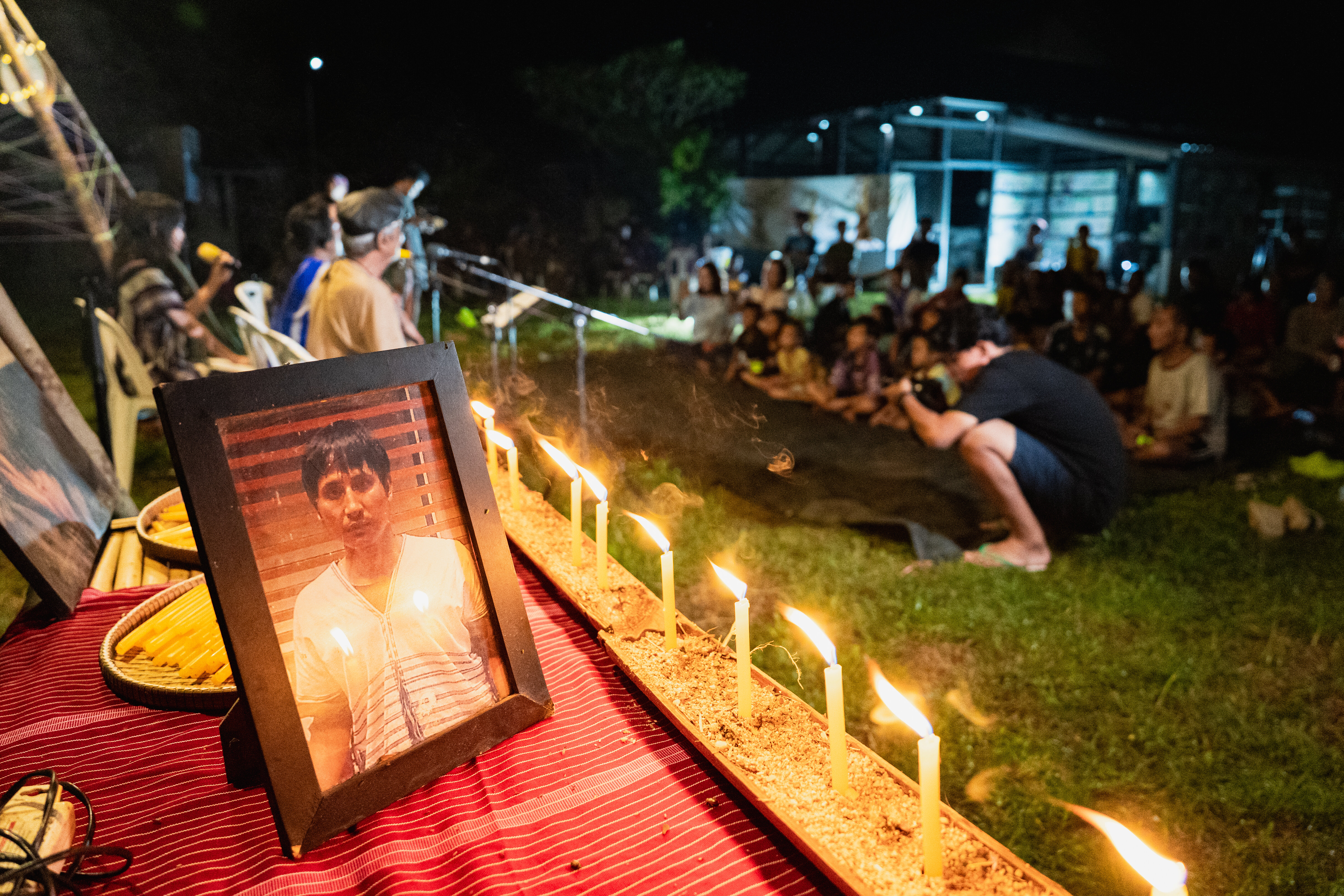
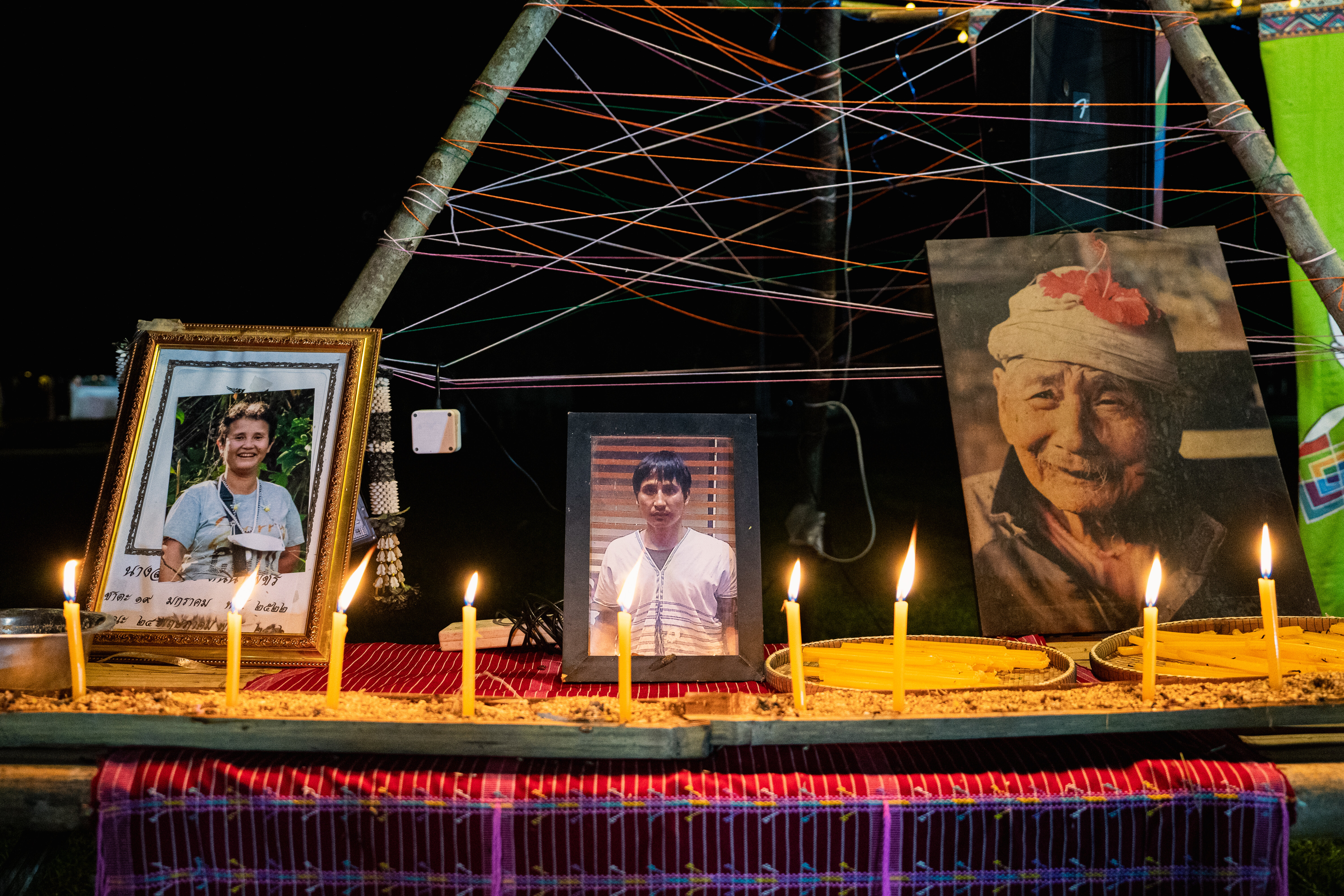
Prayer vigil for Billy and other members of Karen-Bangkoi-Jai Paen Din who died (2024).
After eleven years, Billy's family--his mother, wife, and five children--filed the civil lawsuit on 4 April 2024 against the Department of National Parks, Wildlife and Plant Conservation, seeking over twenty-six million Baht in damages under the Act on Tort Liability of Officials B.E. 2539. The lawsuit alleged that National Park officers committed a tort by abducting and killing Billy, resulting in damages that include financial loss, mental suffering, and the loss of household labor and support. But the long-awaited civil lawsuit faces yet another delay. Initially scheduled for 21 February 2025, the plaintiff's witness examination in Civil Court case no. P1459/2024 was postponed following a decision by the court to wait for the final judgment in the related criminal case, currently under appeal at the Central Criminal Court for Corruption and Misconduct Cases. [6]
From Poor Nutrition to Health Issues
The health care and basic needs of the Karen community were seriously affected during and post-COVID pandemic. For example, in 2021, eleven breastfeeding mothers had no breastmilk for their babies in the Lower Bang Kloi village, and a three-month old disabled child had to be brought to the hospital due to malnutrition. Others were infected with COVID 19 aside from health problems such as fever, heavy breathing and shaking hands and feet.
Without fertile land in the resettlement area to use, many young Karens had to find work in the city in order to feed their family. The Karens are still facing acute food insecurity and malnutrition as a result of having no access to their traditional means of subsistence (foraging food in the forest, collecting wild honey, and rotational farming) since they have been barred from entering the national parks.
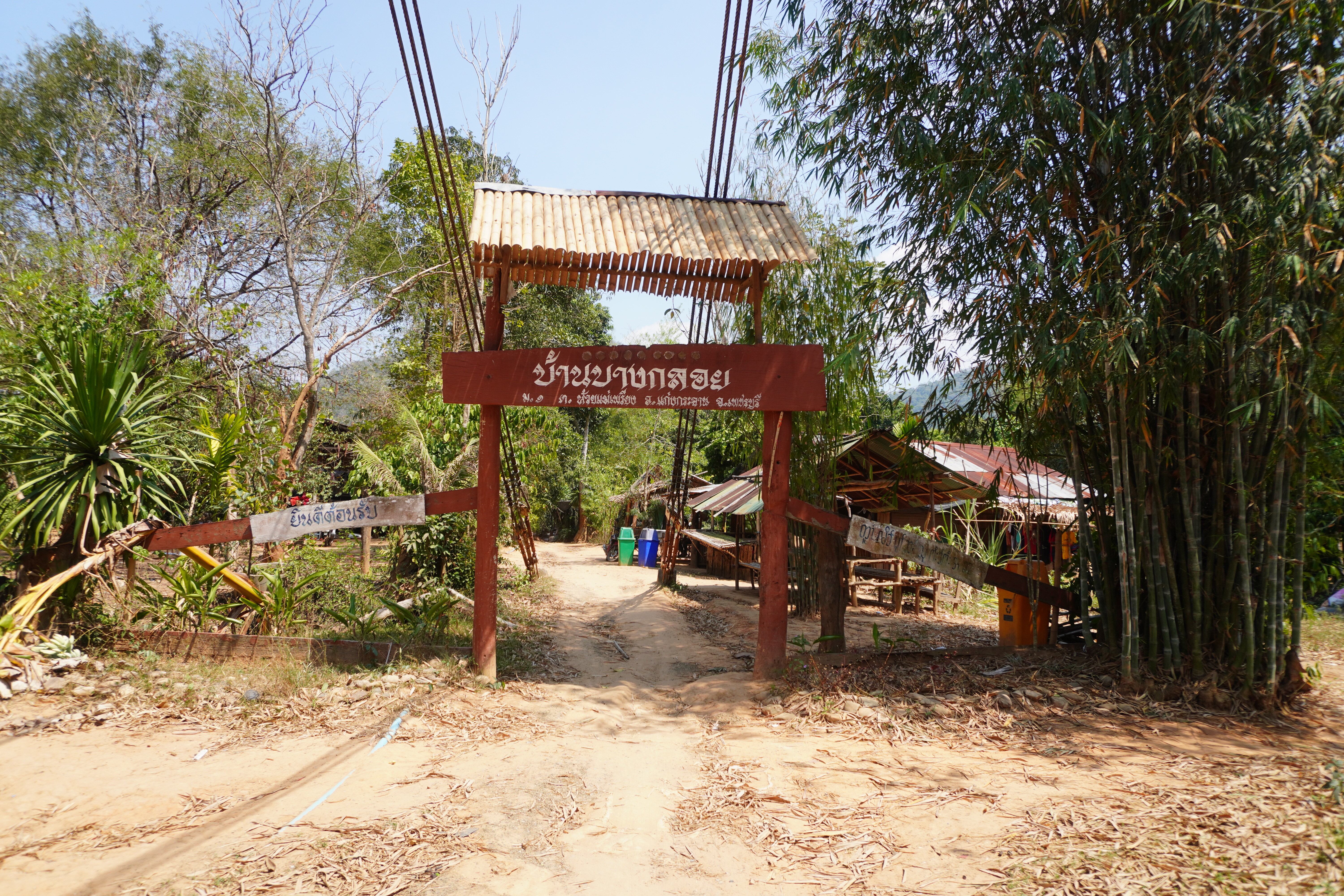
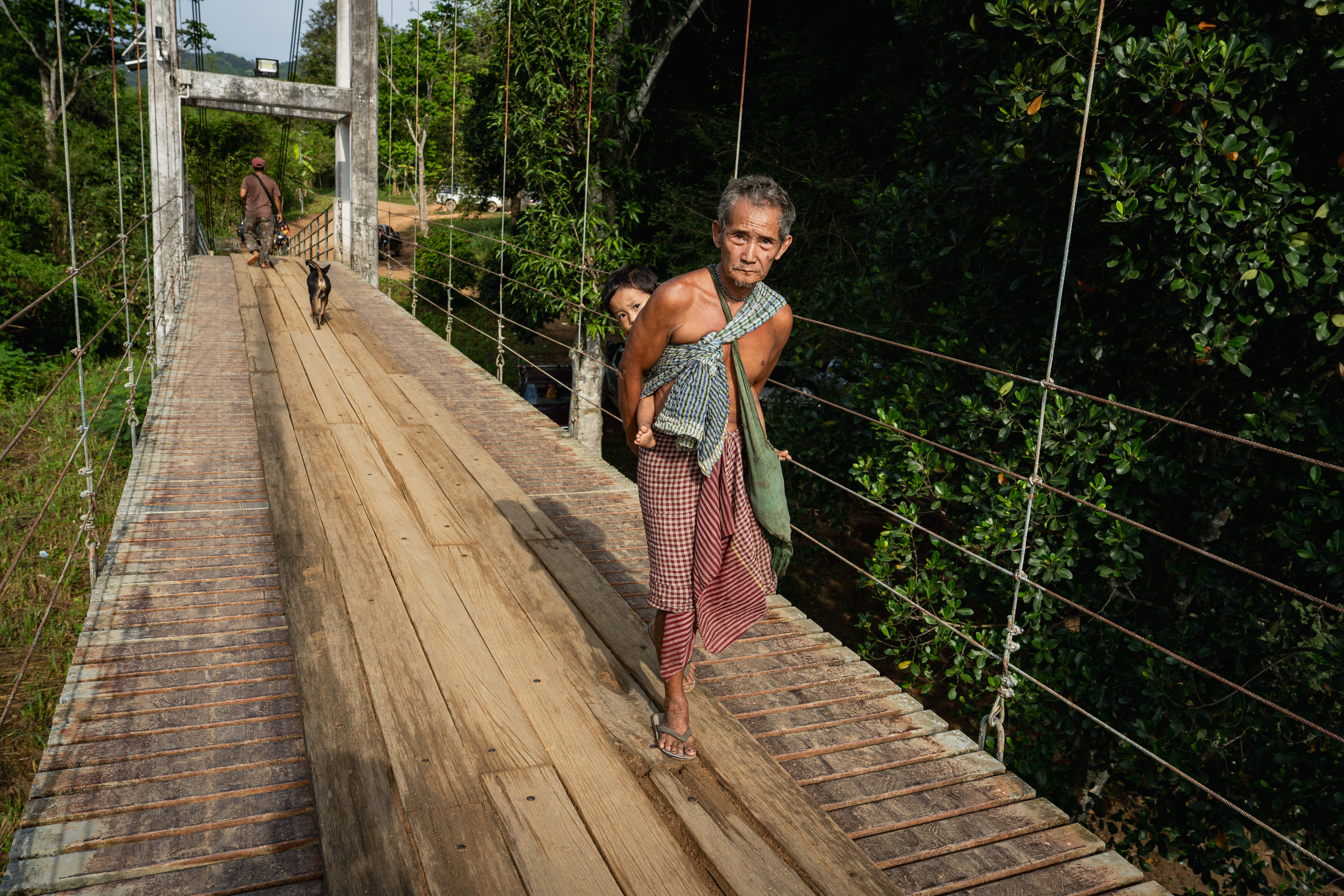
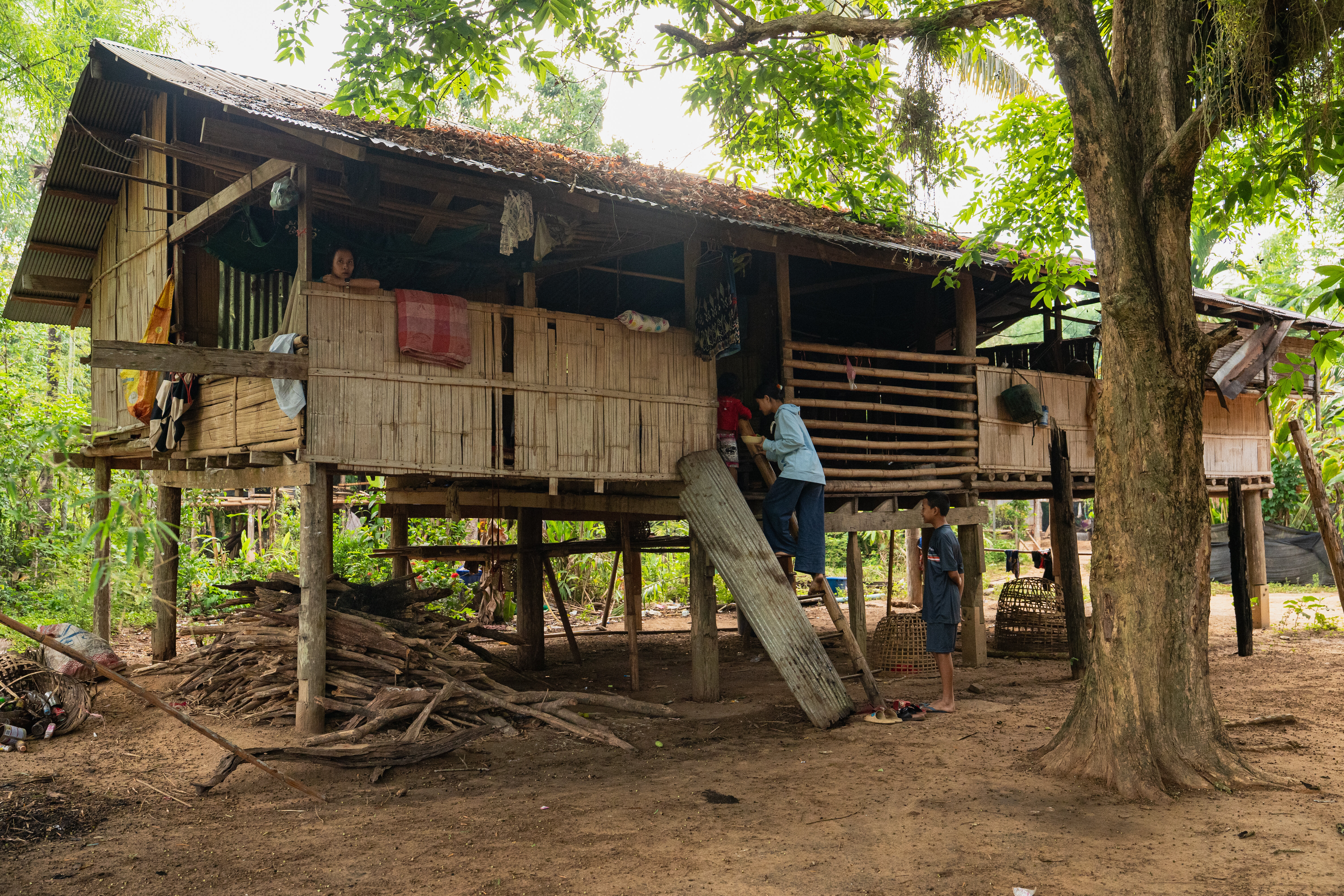
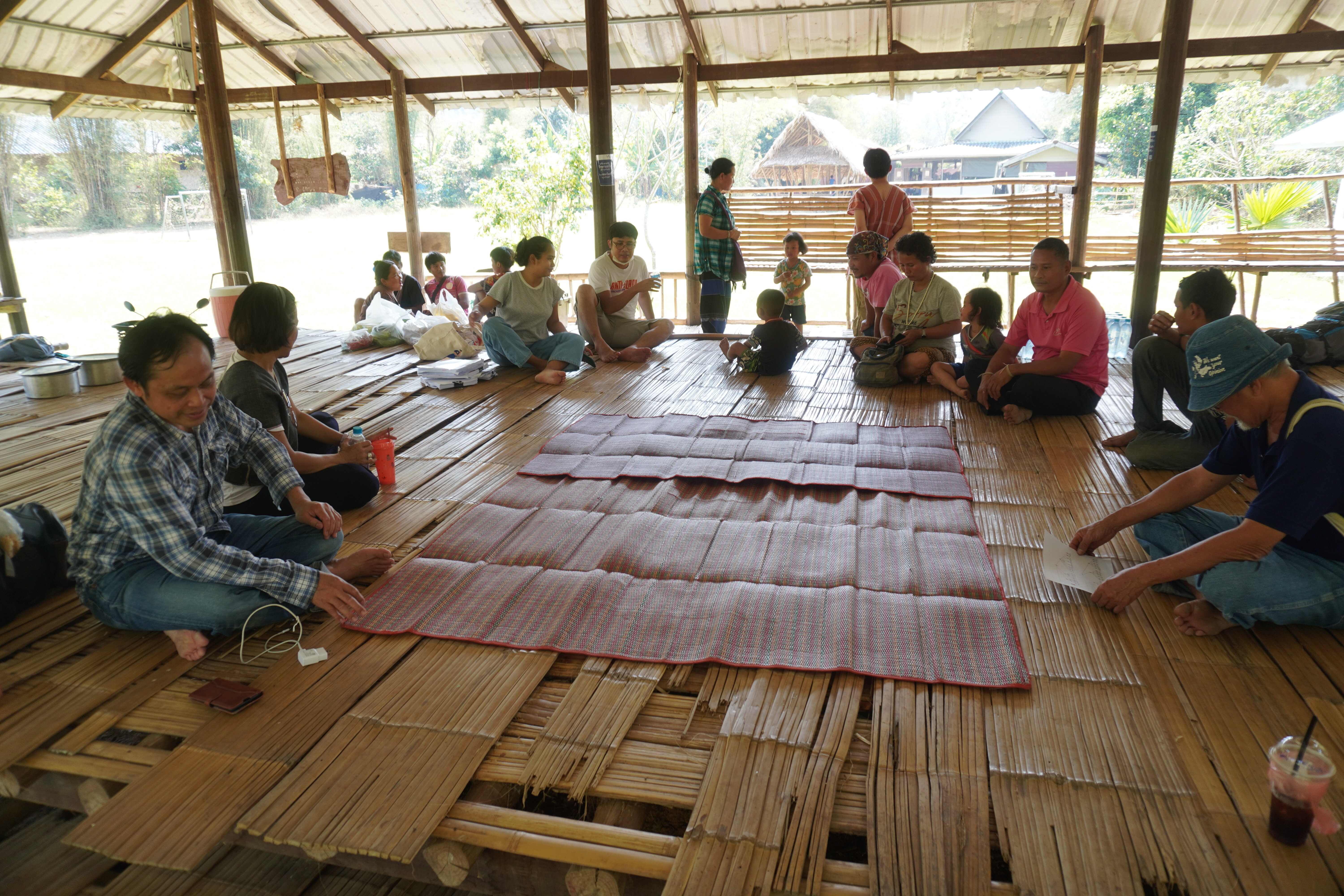
Bangkoi resettlement area (2024).
The government has not yet conducted the mandatory forest survey under Article 65 of the National Park Act (2019). For this reason, villagers do not know the exact zone of the forest where they are allowed to harvest food for survival. Most of the villagers rely on donated food, such as rice, instant noodles, and canned fish with low nutritional value. During the COVID-19 pandemic, they were unable to work and earn enough money to provide nutritious food for their families. Besides the health and livelihood issues, there are also existing rights violations as discussed below.
Other Human Rights Violations
In March 2021, eighty-five villagers were forcibly relocated by helicopter, and twenty-two were detained, including women, mothers separated from infants, and a person with a disability. The detainees were coerced into signing documents written in a language they could not read, denied timely access to legal counsel, and charged with encroachment under the National Park Act, carrying penalties of up to twenty years of imprisonment and heavy fines. Humiliating practices, such as forcing men to shave their hair--a sacred symbol of identity--further deepened the abuse.
Despite call from the civil society to drop the charges, twenty-eight Karen-Bangkoi villagers still face prosecution. The government's attempt at a resolving the cases through a committee excluded Karen representatives, and failed to have any meaningful progress after many months.
In 2025, the case of the twenty-eight Karen-Bangkoi villagers is still pending at Petchaburi Prosecutor's office with pressure from a nation-wide advocacy via #Savebangkloi[7] movement together with Council of Indigenous Peoples in Thailand (CIPT). If the prosecutor decides to press charges, bail can be set at 100,000 Baht per person, or 2.7-million Baht in total - an extraordinarily high sum for villagers of extremely limited income.
A couple of years earlier, on 25 May 2023, Gib Tonnampen, a woman human rights defender from this village died due to the delay in detecting that she got dengue. Her husband brought her to the Kaengkachan Hospital, a three-hour-drive away from her village on 22 May 2023. The delay in detecting the disease and the poor emergency medical assistance caused her death. Children in 2024 and 2025 were suffering from lack of urgent medical treatment.
Concluding Remarks
With the commitment that the Thai state and UNESCO jointly established in listing the Kaengkachan area as a Natural World Heritage Site in 2021, there is a need to ensure that the conditions on World Heritage Site management on respect for Indigenous rights are followed.[8] In addition, there is an urgent need for the Thai state and UNESCO to establish an independent monitoring of the human rights situation in Kaengkachan pursuant to the Act on the Protection and Promotion of the Way of Life of Ethnic Groups, a legal basis for them to act together on this matter. There is also an urgent need to provide humanitarian aid in terms of food supply and healthcare in Karen-Bangkoi- Jai Paen Din community, Kaengkachan which is in danger of extinction.
The Karen community in Bangkoi represents an extreme case of an ideology in Thailand denying the existence of indigenous peoples. This ideology has tragic, intergenerational effects on their way of life. Repressive measures reached an extreme form with the enforced disappearance of Billy in 2014, the impact of COVID-19 and the possible extinction of Karen, a protected population in Bangkoi. The impact of poor nutrition and health issues on the Karen community in Bangkoi reveals to the world that Thailand was no longer concealing its systematic discrimination against this indigenous community--whom the Thai state is internationally obligated to protect.
Pornpen Khongkachonkiet is a licensed lawyer and the Executive Director of Cross Cultural Foundation, a Bangkok-based non-governmental organization that provides legal assistance to victims of state violence and advocates for the reform of the justice system in Thailand.
For further information, please contact: Pornpen Khongkachonkiet, Cross Cultural Foundation, 89 Soi Sitichon, Suthisan-winichai Road, Samsennok sub-district, Huaykwang District, Bangkok; phone+ 66659793836; e-mail: noinoipornpen@crcfthailand.org, https://crcfthailand.org/en/.
[1] His Majesty the King of Thailand issued on 19 September 2025 a Royal Command promulgating the Act on the Protection and Promotion of the Way of Life of Ethnic Groups. The law took effect on the same day.
[2] Legal protection for ethnic groups, The Bangkok Post, 29 September 2024, www.bangkokpost.com/opinion/opinion/2874097/legal-protection-for-ethnic.
[3] See United Nations Treaty Collection, https://treaties.un.org/pages/viewdetails.aspx?src=treaty&mtdsg_no=iv-2&chapter=4&clang=_en.
[4] Since 2021, the DSI has offered protection to Pinnapa Pruksaphan, the wife of Porlachee Rakjongcharoean, under its protection program.
[5] Activists want Chaiwat sacked over 'Billy' disappearance, Bangkok Post, 21 April 2023, www.bangkokpost.com/thailand/general/2554334/activists-want-chaiwat-sacked-over-billy-disapperance.
[6] Delay in Billy's Family's Civil Lawsuit Against the Department of National Parks, Cross Cultural Foundation, 13 February 2025, crcfthailand.org/2025/02/13/58138/.
[7] #Savebangkloi Coalition is a group of youth activists organized to raise awareness of the issue of Indigenous Peoples and in particular responding to multi discrimination against Karen in Kaeng Krachan National Park prior to UNESCO world heritage campaign by the Thai government without prior informed consent from the local communities. The coalition was formed in 2021 and continued its efforts of raising awareness among young population to understand the diverse backgrounds of Indigenous peoples in Thailand.
[8] See World Heritage and Indigenous Peoples, UNESCO, https://whc.unesco.org/en/activities/496/.