
Across Thailand, refugees and displaced people from Myanmar continue to face a growing humanitarian crisis. Prolonged conflict, economic instability, and the ongoing displacement in Myanmar have driven thousands to seek safety across the border. Yet, amid shrinking international funding and limited policy flexibility, many refugees now find themselves with fewer options for survival and self-reliance.
Refugee Camps
Thailand has been hosting refugees from neighboring countries since 1984. Refugees from Myanmar have been accommodated in nine temporary shelters along the western border; a smaller additional population of several thousand resides in urban areas.
The nine camps are concentrated in four western provinces: Mae Hong Son (Ban Mai Nai Soi; Ban Mae Surin; Mae Ra Ma Luang; Mae La Oon), Tak (Mae La; Umpiem Mai; Nu Po), Kanchanaburi (Ban Don Yang) and Ratchaburi (Tham Hin).
In August 2025, Thailand adopted a policy of allowing Myanmar refugees from the nine camps to work legally, potentially boosting self-reliance and local economic contribution. While the move is a step forward, concerns remain over their protection, safety, and access to safe and decent employment.
Along the Thailand-Myanmar border, the refugee camps function as enclosed communities where generations have grown up with limited mobility and few opportunities for self-reliance. Daily life is shaped by strict regulations, dependence on aid, and long-standing uncertainties about the future. The camps remain places of safety for many, yet they also reflect how protracted displacement has created a fragile environment where even basic services are difficult to maintain.
Issues
In the border camps, humanitarian agencies report a steep decline in resources over the past year, forcing significant cuts to food, social protection and livelihood programs. Assistance has become increasingly, reaching only the most vulnerable groups such as the elderly, people targeted with disabilities, unaccompanied children, and individuals facing mental-health difficulties. Families who once received regular support now struggle to meet daily food needs or pay for basic items.
Food insecurity has deepened as agricultural and small-scale livelihood projects have been discontinued. These activities previously helped families produce supplementary food and modest income, but without them, dependence on dwindling aid has grown. Refugees' access to employment remains tightly restricted.
In urban settings such as Bangkok, displaced Myanmar nationals face overlapping vulnerabilities. Many rely on emergency cash or food assistance, often shared among families in overcrowded housing. The rising cost of living, coupled with the absence of legal pathway for employment rights, has pushed more people into precarious informal work or deeper debt. Some community groups continue to provide temporary shelter, language and skills training, and psychosocial support, but these programs are also under strain as international financial support decline.
Education remains one of the few areas of hope, yet even this is now at risk. Learning opportunities for children in both camps and migrant communities have been scaled back. While some primary education continues through community and faith-based groups, support for older students such as transportation, exam preparation, and language certification has been reduced or suspended. Moreover, certificates from informal learning centers are still not officially recognized, limiting children's ability to transition into formal Thai schools.
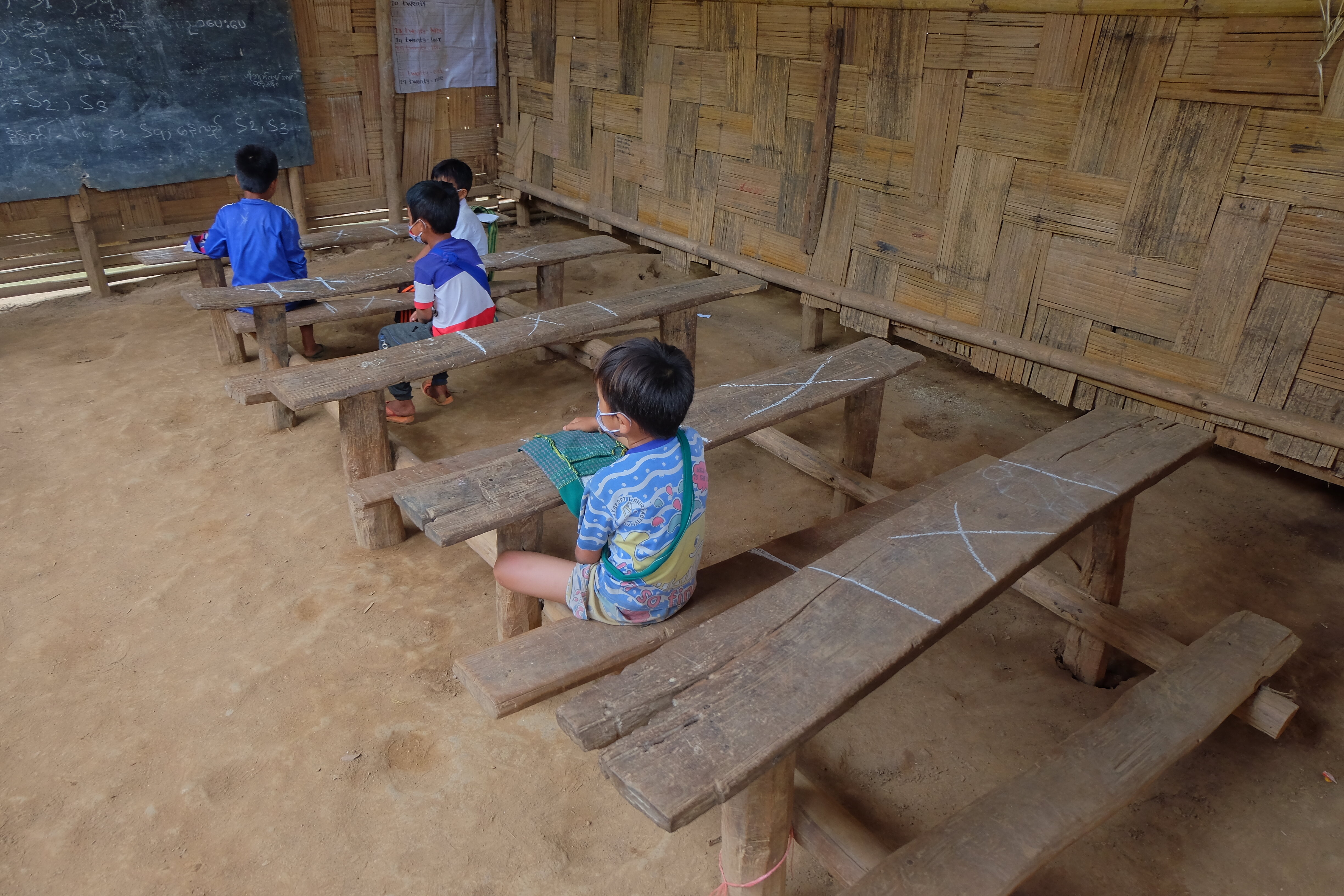
Primary school in a refugee camp
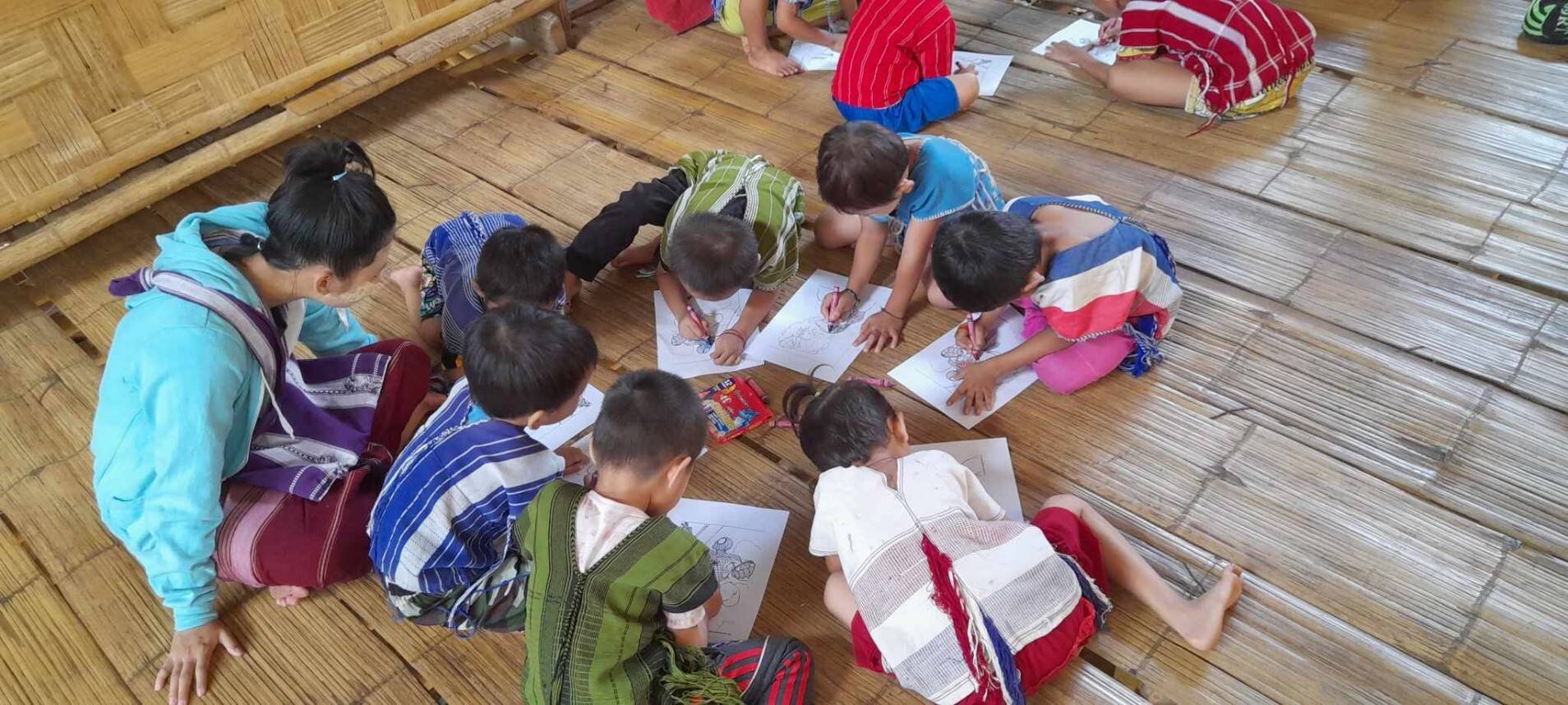
Early childhood development program
Recent reports from humanitarian monitors have warned that funding suspensions from major international donors have disrupted essential healthcare, nutrition and protection services. Clinics in several border camps have faced temporary closures or reduced hours, forcing residents to travel long distances for treatment. Aid groups describe the current situation as one of the most severe funding shortages in decades, with frontline workers struggling to maintain even minimal levels of assistance.
Despite these challenges, humanitarian and faith-based networks continue to coordinate efforts to protect refugees and advocate for durable solutions. Awareness campaigns and regional cooperation highlight the urgent need for sustained international engagement and shared responsibility. Some local communities and employers in Thailand have expressed willingness to integrate refugees into agricultural or service work, but without clear legal pathways, progress remains slow.
Prospect of the Future
The humanitarian situation of Myanmar refugees in Thailand stands at a critical juncture. The combined impact of protracted displacement, reduced donor support, and restricted livelihood options threatens to undo years of progress in self-reliance and protection. Renewed attention and commitment from both international partners and Thai authorities are vital to ensure that these communities are not forgotten, and that the principles of dignity, safety and opportunity remain at the heart of the regional response.
Amid these challenges, organizations such as Jesuit Refugee Service (JRS) continue to prioritize efforts that strengthen community resilience and uphold the dignity and well-being of displaced populations. Current initiatives safeguard including continuity of learning for children and youth, and collaborating with local partners to enhance access to skills development and other pathways that support self-reliance. Advocacy also remains essential, particularly in promoting policies that enable refugees to engage in safe and decent work, move with greater predictability, and access essential services without discrimination or fear. Although the broader political environment remains complex, these efforts represent meaningful steps toward reinforcing protection systems and sustaining hope for communities facing prolonged uncertainty.
Kunanyaporn Jirasamatakij is the Advocacy and Communications Officer of the Jesuit Refugee Service Asia Pacific, based in Bangkok.
For further information, please contact: Kunanyaporn Jirasamatakij, Jesuit Refugee Service Asia Pacific; 43, 12 Soi Ratchavithi, Samsen Nai, Phaya Thai, Bangkok 10400, Thailand; phone: +66 2 640 9590; e-mail: kunanyaporn.jirasamatakij@jrs.net ; www.jrs.net .